
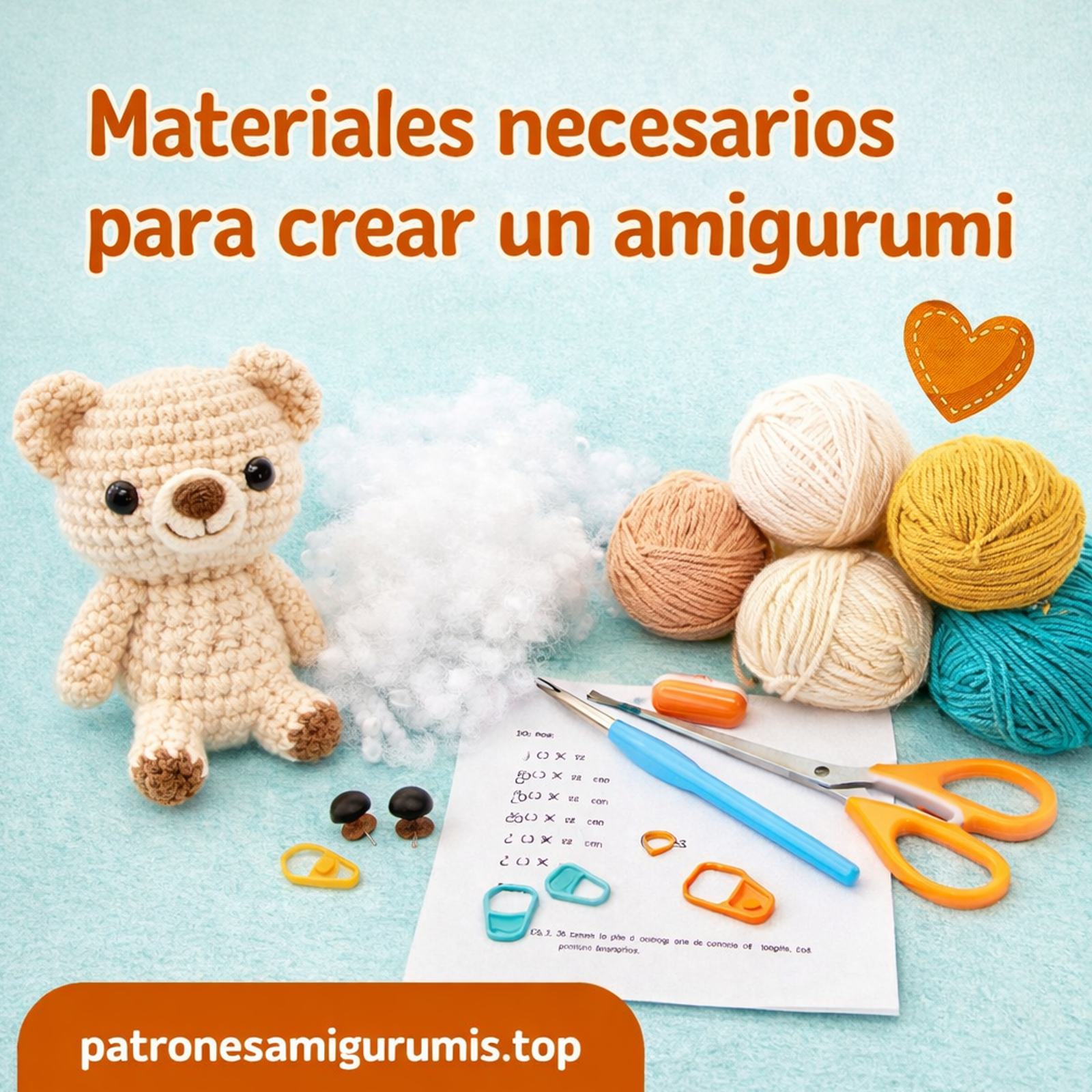
Starting amigurumi is much easier when you know which tools are truly useful. This guide explains the basic materials you need to turn yarn into firm, neat and adorable crochet dolls.
Before you start: useful supplies for this amigurumi
Check yarn, eyes, stuffing, and accessories before crocheting so you do not get stuck halfway through the project.
- Safety eyesAdds a clean, even expression to the doll.View options
- Cotton yarnPick similar colors before you start.View options
- yarn for amigurumiA practical way to gather supplies quickly.View options
- Yarn needleEssential for sewing pieces and hiding ends.View options
- Crochet hookThe right size keeps stitches firm and neat.View options
- Safety noseA small detail that improves the finish.View options
Links open Amazon searches related to each material.
You do not need to buy everything at once. Begin with the essentials, choose materials that match the pattern, and build your kit as you gain confidence.
Yarn or cotton
The yarn defines the texture, size and final look of your amigurumi. The most common choices are 100% cotton, mercerized cotton and soft
Advertisement / affiliate link. As an Amazon Associate, I earn from qualifying purchases.
- 100% cotton gives excellent stitch definition.
- Mercerized cotton is stronger, slightly shiny and holds color well.
- Soft acrylic can be affordable and friendly while you practice.
The thickness of the yarn changes the final size of the toy, so follow the pattern recommendation when you want a similar result.
Crochet hook
For amigurumi, the hook is usually a little smaller than the yarn label suggests. This keeps the stitches tight and prevents the stuffing from showing through.
- Thin yarn often works well with a 2 mm to 2.5 mm hook.
- Medium yarn often works well with a 3 mm to 3.5 mm hook.
- If the fabric has holes, try a smaller hook or firmer tension.
The goal is not to crochet painfully tight, but to create a dense, clean fabric.
Stuffing
Fiberfill gives the doll shape, volume and softness. Add it gradually in small portions instead of pushing in one large piece.
- Use soft, lightweight and washable stuffing.
- Distribute it with the back of the hook or a small stick.
- Stuff firmly enough to hold the shape, but not so much that the stitches stretch.
Even stuffing is one of the secrets of a professional-looking amigurumi.
Yarn needle
A yarn needle is essential for sewing parts together, hiding ends and embroidering small details. Choose one with a blunt tip and a large eye so the yarn passes through easily.
- Sew arms, legs, ears and head pieces.
- Hide yarn tails neatly inside the work.
- Embroider noses, mouths, eyebrows or decorative details.
It is different from a regular sewing needle because it does not split the crochet fibers as easily.
Scissors
Small sharp scissors help you cut yarn tails close to the fabric without damaging the stitches. Keep one pair only for yarn if possible so the blades stay precise.
Clean cuts make finishing easier and avoid loose fuzzy ends.
Safety eyes and embroidered details
Safety eyes add a polished expression, but they are not suitable for every project. They are attached with a plastic washer inside the fabric.
- For dolls made for babies or children under 3, do not use plastic safety eyes.
- The safest option for small children is embroidered eyes.
- Felt details can work for decorative pieces, but they must be secured carefully.
When in doubt, choose embroidery. It is soft, washable and safer for toys that will be handled a lot.
Stitch marker
Most amigurumi pieces are crocheted in a continuous spiral. A stitch marker helps you identify the first stitch of each round and avoid losing your count.
- Use a plastic marker, a small clip or a piece of contrasting yarn.
- Move it up at the beginning of every round.
- Count stitches often, especially after increases and decreases.
This simple habit saves a lot of unraveling later.
The amigurumi pattern
A good pattern is your map. It should tell you the materials, stitch count, rounds, color changes and assembly steps clearly.
- Read the full pattern before starting.
- Check the abbreviations if you are unsure.
- Keep the materials list nearby while you work.
If you need help with stitch terms, use the crochet abbreviations guide before choosing your next project.
What to buy first
For a first kit, keep it simple: one or two cotton yarn colors, a matching hook, fiberfill, a yarn needle, scissors and a stitch marker.
- Add safety eyes only when the project is not intended for a baby.
- Choose a beginner-friendly pattern from the free amigurumi patterns hub.
- Buy extra colors later when you know which projects you enjoy most.
A small, good-quality kit is better than a drawer full of tools you do not use.
Frequently asked questions
What materials do I need to start making amigurumi?
Start with cotton yarn, a crochet hook, fiberfill, a yarn needle, scissors, a stitch marker and a clear pattern. Safety eyes are optional and should be avoided for toys for babies.
What is the best yarn for amigurumi?
Mercerized cotton is one of the best options because it defines stitches well, keeps its shape and has durable colors. Soft acrylic can also be useful for practice.
Why use a smaller hook for amigurumi?
A slightly smaller hook creates tighter stitches, which keeps the stuffing hidden and gives the doll a firmer shape.
Are safety eyes safe for baby amigurumi?
No. For babies and children under 3, plastic safety eyes are not recommended. Embroidered eyes are the safest choice.

Leave a reply